Book Appointment Now
Why use me to obtain your visas?
Without our knowledge, experience and expertise you will have to research the complex process yourself – which is time consuming – from outdated government websites. With my assistance you can focus on your resettlement whilst receiving the best advice and service at affordable prices.
* Immigration 4 U operates nationally and internationally from Pretoria but doesn’t have any association or link to any other company or organization with the same or similar name.

Our team
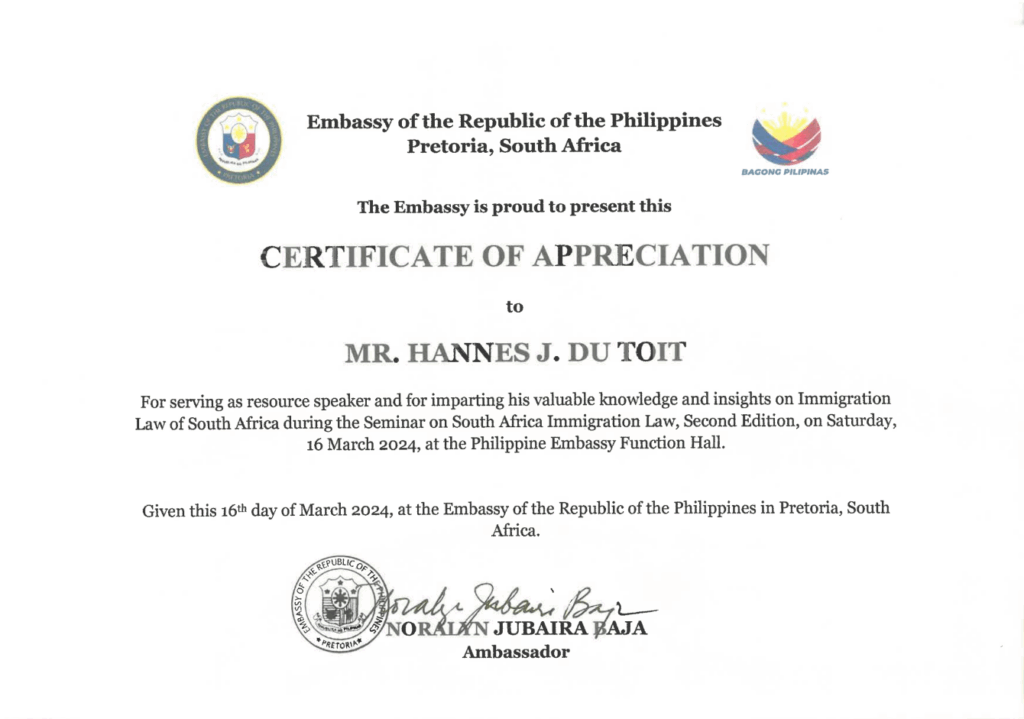
Immigration 4 U was established at the end of 2000 by our Managing Member, Hannes du Toit, after 15 years of service at the Department of Home Affairs during which period he had two diplomatic postings in Harare and Moscow. Living in these two countries taught him the frustrations and difficulties surrounding international relocations, including red-tape, traditions and language barriers.
Hannes du Toit
After the completion of his schooling he furthered his education by obtaining a B.Com (Human Resources) degree at the University of Pretoria. Due to bursary obligations he joined the Department of Home Affairs in 1986 and progressed swiftly through the ranks.
He acted as Regional Representative in Walvis Bay (now part of Namibia), was District Representative in Centurion and Regional Representative in Pretoria before being transferred to Harare where he was in charge of the Visa Section at the South African High Commission. He was there-after sent to Moscow, to open the Consular Section for the Department. Within 2 years his Section was rated the best Consular Section of all embassies by the Russian press.
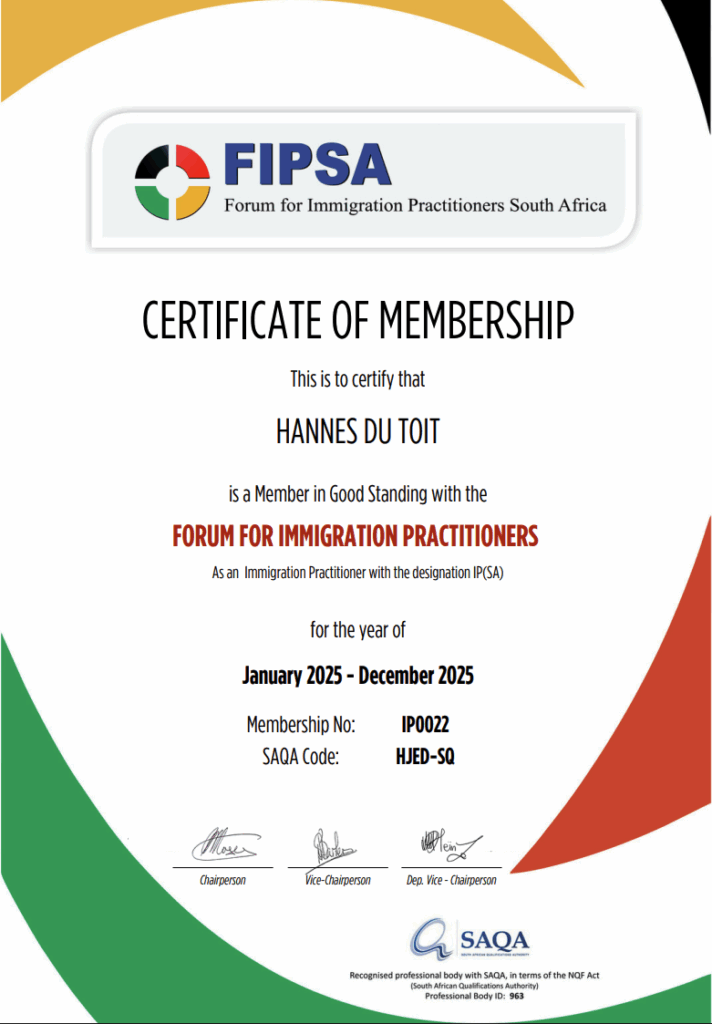
Upon his return he resigned from the government service and started this company. Since then he had obtained his Master’s Degree in Business Leadership through UNISA’s Business School and is a member of the Forum of Immigration Practitioners of South Africa.
The South African immigration industry involves several role-players and has undergone significant regulatory changes.
The industry was originally regulated by the Department of Home Affairs (DHA).
Prior Regulation (Before Repeal of Section 46)
Prior to the repeal of Section 46 of the Immigration Act, Act No. 13 of 2002, a person was required to be a Registered Immigration Practitioner in order to legally assist a foreigner with immigration-related activities.
Section 46 of the Act stated:
46.(1) “No one, other than an attorney, advocate or immigration practitioner may conduct the trade of representing another person in the proceedings or procedures flowing from this Act.” (2) “In order to be registered on a roll of immigration practitioners to be on a roll of immigration practitioners by the DG… producing evidence of the prescribed qualifications…” (3) “… the Director General may withdraw the registration of an immigration practitioner who has contravened the Act of any prescribed duty.”
Current Regulatory Landscape (After Repeal)
Since the repeal of Section 46, this industry became unregulated with respect to a mandatory practitioner register. There are now three primary types of role-players operating in this space: agents, immigration lawyers, and registered (though voluntary) immigration practitioners.
1. Agents
An agent is defined as: “A person authorized to act on behalf of another person. The party an agent is authorized to act for is known as the principal. A principal-agent relationship can either be intentionally created or created by implication through one’s actions.”
A key issue is that this role currently has no mandatory qualifications, experience, or registration requirements mentioned under the current law. Consequently, there are limited or no formal consequences under the Act for applicants who receive poor or incorrect assistance from this type of representative.
2. Immigration Lawyers
It is important to note that no specific legal faculty or course at any South African university offers a qualification dedicated solely to immigration law. However, an attorney or advocate, after completing their general legal qualification, can:
Article/Start working at a legal practice to accumulate knowledge and experience in the immigration field.
Specialise in immigration and join a professional body like the Forum of Immigration Practitioners of South Africa (FIPSA), or simply practice under the regulation of the Legal Practice Council (LPC).
3. Registered Immigration Practitioners (Self-Regulated)
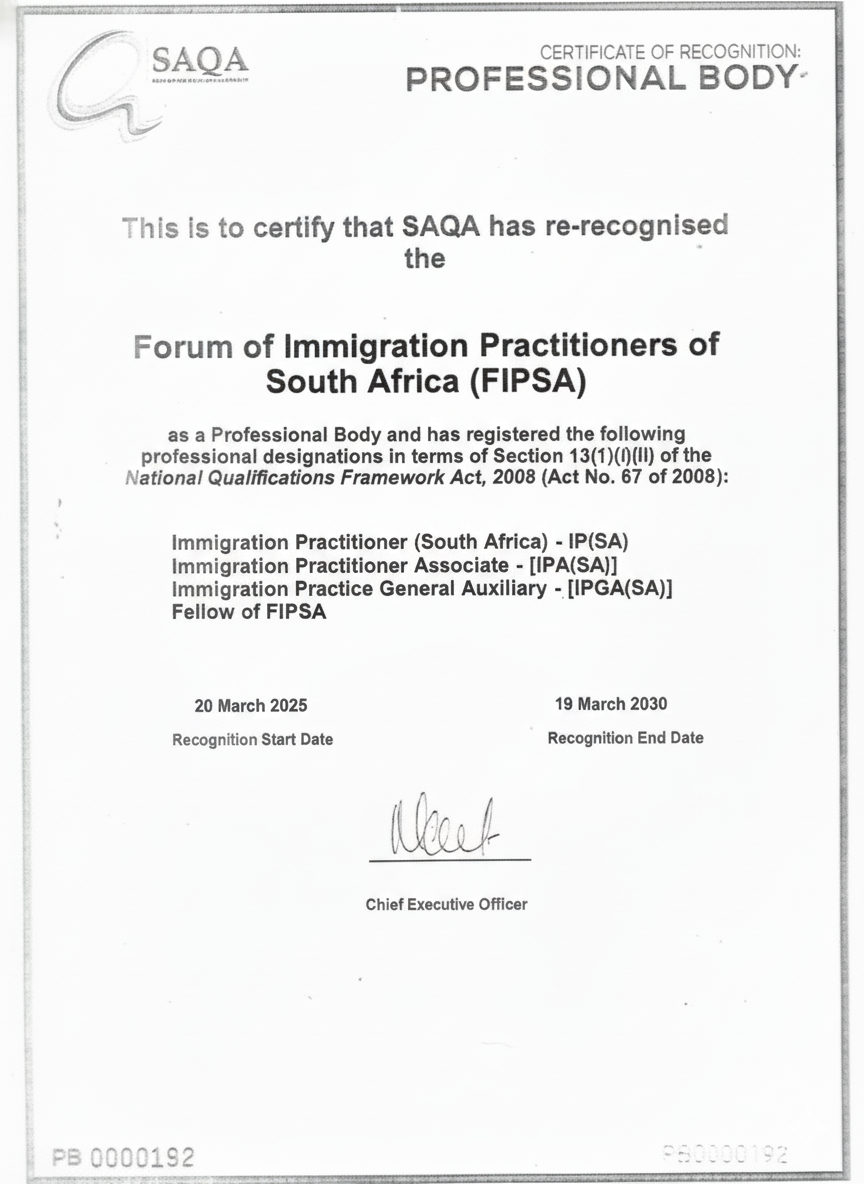
Due to the void created by the repeal of Section 46, reputable practitioners decided to self-regulate this segment of the industry. This was achieved by establishing a professional body, the Forum of Immigration Practitioners of South Africa (FIPSA), and registering it with the South African Qualifications Authority (SAQA).
To meet SAQA’s criteria, FIPSA had to establish:
A comprehensive Code of Conduct.
Four professional levels/designations based on years of experience in the industry.
The successful completion of required professional exams.
To be recognized as a fully-fledged member and consult individually, a person must be accredited as an Immigration Practitioner (South Africa). This body often consists of former Department of Home Affairs officials and qualified lawyers.